
Sub-Total: $0.00
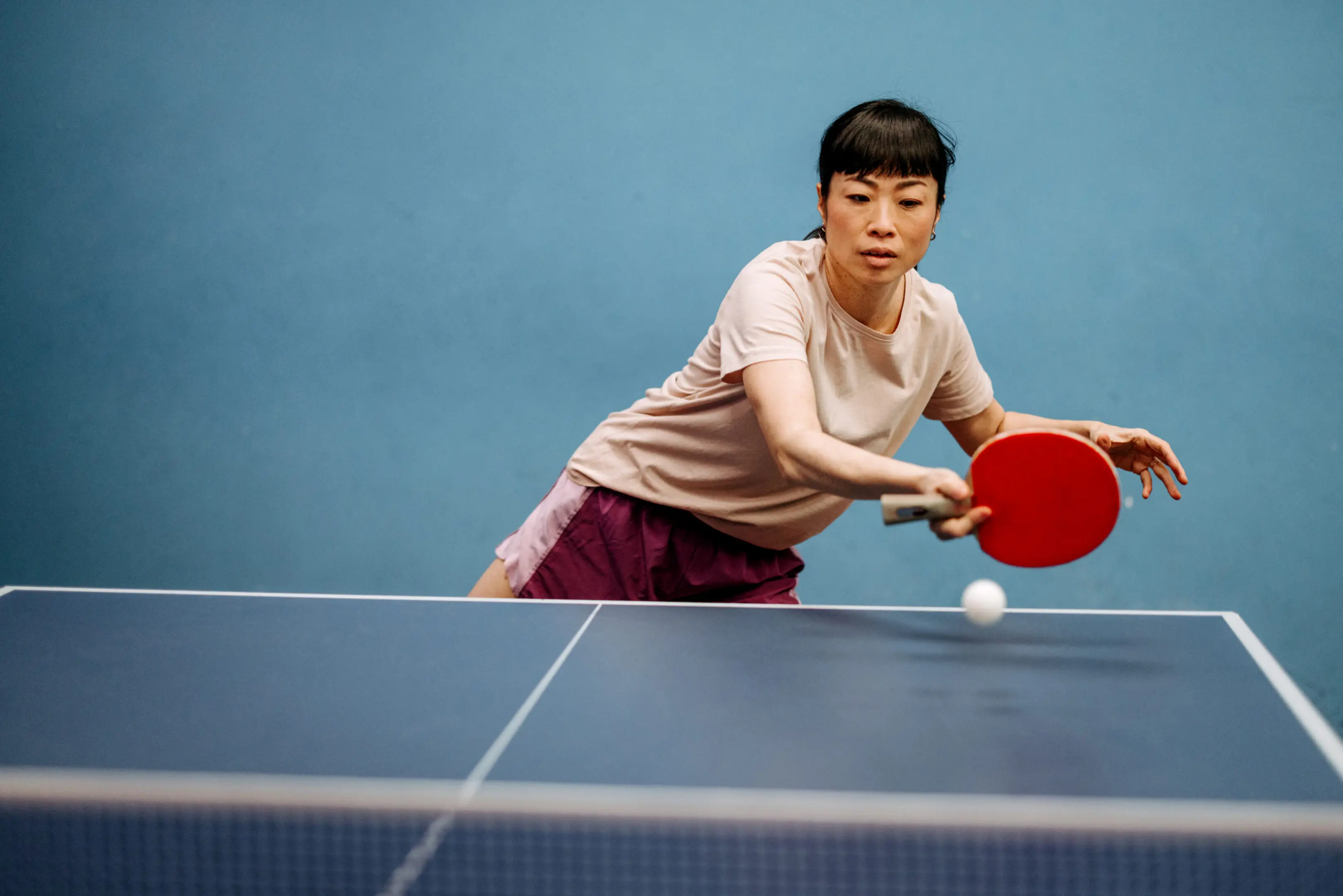
Are You Afraid of the Paddle?
Imagine this:
You may have just encountered what we playfully call:
HIPPOPOTOMONSTROTABLETENNISIPHOBIA!
The term was created to put a humorous name to something quite understandable: the nervousness or apprehension a beginner—or even an experienced player under pressure—may sometimes feel when confronted with the speed, coordination, competition and unpredictability of table tennis.
Example
Despite her remarkable athletic agility, Susan felt a wave of anxious insecurity whenever someone handed her a racket. Her friends jokingly diagnosed her with hippopotomonstrotabletennisiphobia.
Of course, hippopotomonstrotabletennisiphobia is not a recognized clinical diagnosis. It is our own playful expression.
But the challenge behind the joke is real.
Table tennis asks the brain and body to work together remarkably quickly. You see. You anticipate. You decide. You move. You strike. Then, almost immediately, you prepare to do it all over again.
Perhaps the best remedy for hippopotomonstrotabletennisiphobia is therefore the simplest:
Pick up a racket. Start slowly. Keep the ball on the table. Enjoy the rally. And play again tomorrow.
HIPPOPOTOMONSTROTABLETENNISIPHOBIA
hip·po·pot·o·mon·stro·table·ten·nis·i·pho·bi·a
noun • humorous coined term
Definition: An irrational fear, apprehension, or performance anxiety associated with playing table tennis.
Coined by Dr. Noble • September 14, 2026
Not a recognized medical or psychiatric diagnosis.
Table Tennis:
Exercise for Body and Brain
Table tennis may look simple from across the room.
A small ball travels over a net. One player returns it. The other sends it back.
But stand at the table with a racket in your hand and something very different becomes apparent.
Your eyes are tracking the ball. Your brain is estimating its speed, direction, bounce and spin. You are anticipating your opponent. Your body is adjusting its position. Your hand must put the racket in the right place at precisely the right moment.
Then the next ball arrives.
This combination of movement, attention, coordination, anticipation and rapid decision-making is one reason table tennis can be such an engaging form of physical activity.
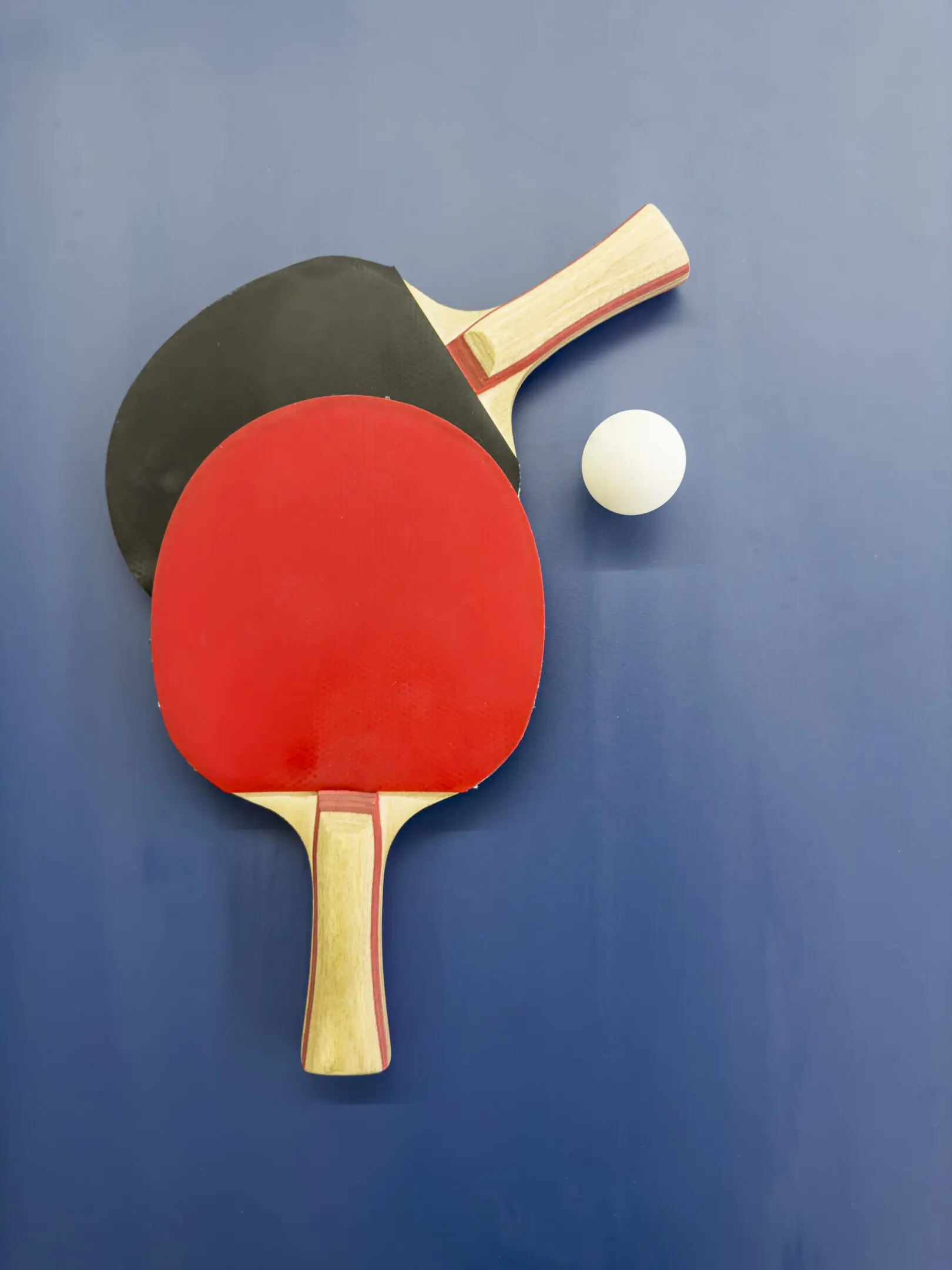
Service Sequence
Your Brain
Benefits From Movement
The brain and body do not operate as separate systems.
During physical activity, the cardiovascular system works harder to deliver oxygen and nutrients throughout the body, including the brain. Regular exercise is associated with numerous benefits for physical health and can also support aspects of brain health and cognitive function.
Exercise has also been studied in relation to brain-derived neurotrophic factor (BDNF), a protein involved in neuronal health and neuroplasticity—the brain’s capacity to adapt and reorganize its connections.
The important point is not that one game of table tennis provides a prescribed neurological “dose.”
Rather, table tennis offers an enjoyable way of combining physical activity with continual cognitive engagement.
Table Tennis
Is an Open-Skill Sport
Some exercise occurs in relatively predictable surroundings.
Table tennis does not.
Your opponent can change the speed, placement, spin and direction of the ball from one stroke to the next.
That makes table tennis an example of an open-skill sport—an activity in which the player continually responds to changing external circumstances.
You cannot simply memorize one movement and repeat it indefinitely.
You must watch.
Interpret.
Decide.
React.
And adapt.
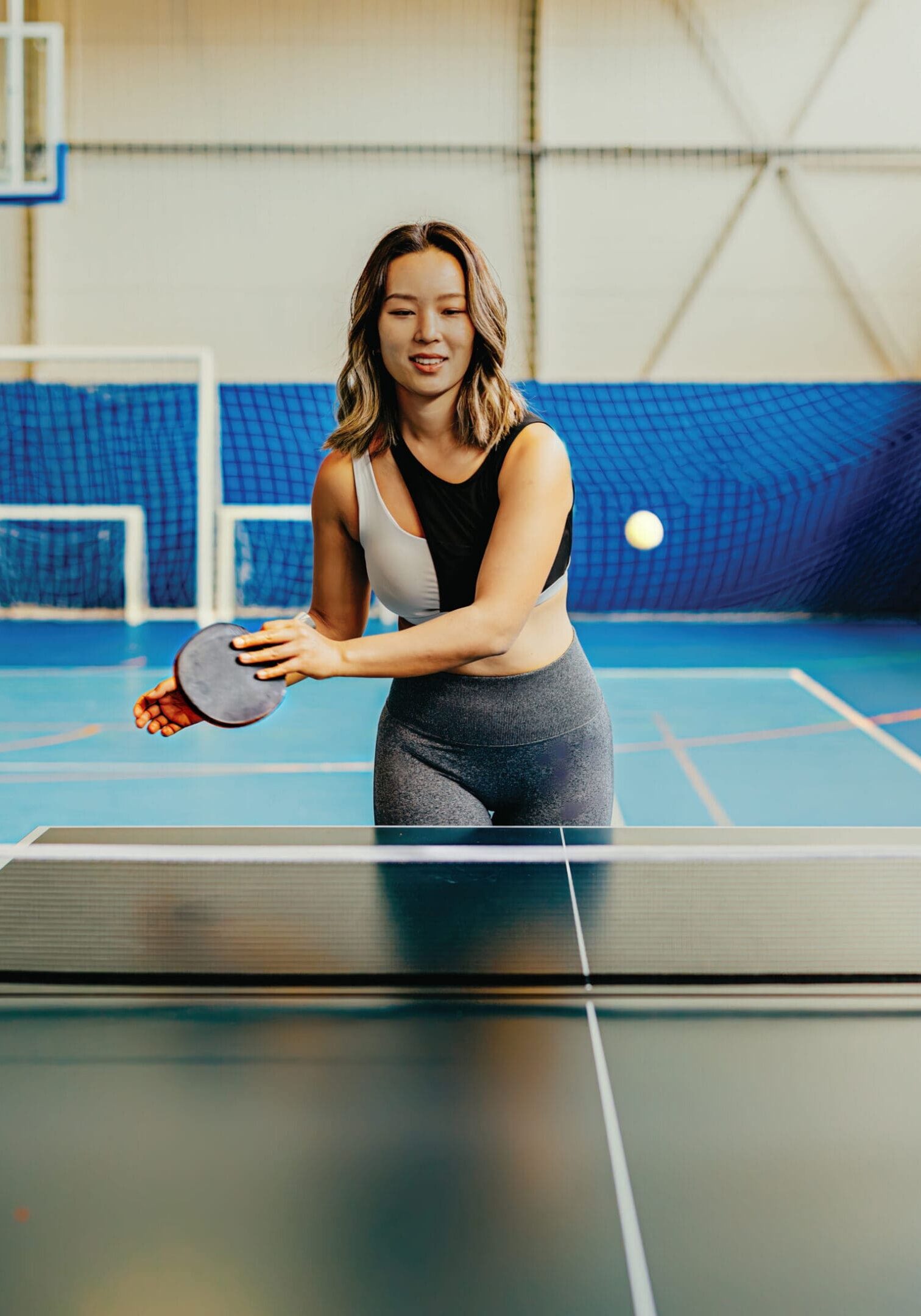
Quick
Reactions
Table tennis moves rapidly.
During a rally, a player may have only a brief interval in which to recognize the incoming ball and select an appropriate response.
As the ball crosses the net, the player is simultaneously processing information about:
Then the body has to act upon that information.
This creates a continual cycle:
SEE → INTERPRET → DECIDE → MOVE → STRIKE → RECOVER
And then the cycle begins again.
Hand-Eye
Coordination
Successful table tennis requires the visual and motor systems to cooperate closely.
The eyes track a rapidly moving object while the brain uses that visual information to guide the arm, hand and racket.
The player must position the racket accurately enough to meet a small moving ball while simultaneously controlling the direction, speed and often the spin of the return.
Practice therefore continually challenges visual tracking, timing, spatial awareness and hand-eye coordination.
These abilities are not exclusive to table tennis. Coordination and spatial awareness are useful throughout everyday life.
The racket may be in your hand, but table tennis is not merely an upper-body activity.
Good play requires continual adjustment of the feet and body.
A ball placed wide to the forehand demands one movement. A quick return toward the backhand demands another. A short ball may bring the player toward the table; the next may require immediate recovery.
Balance, timing and body position must continually adapt to what is happening on the other side of the net.

Thinking Ahead
To a bystander, table tennis may appear to be simply hitting a ball back and forth.
To a player, considerably more is happening.
Where should I place the return?
What spin did my opponent use?
Where is my opponent standing?
Should I attack?
Should I defend?
What shot is likely to come next?
Competitive players continually combine perception with strategy.
They are not merely responding to where the ball is.
They are thinking about where the ball—and their opponent—may be next.
That continual anticipation challenges processes involved in attention, decision-making, planning and strategy.
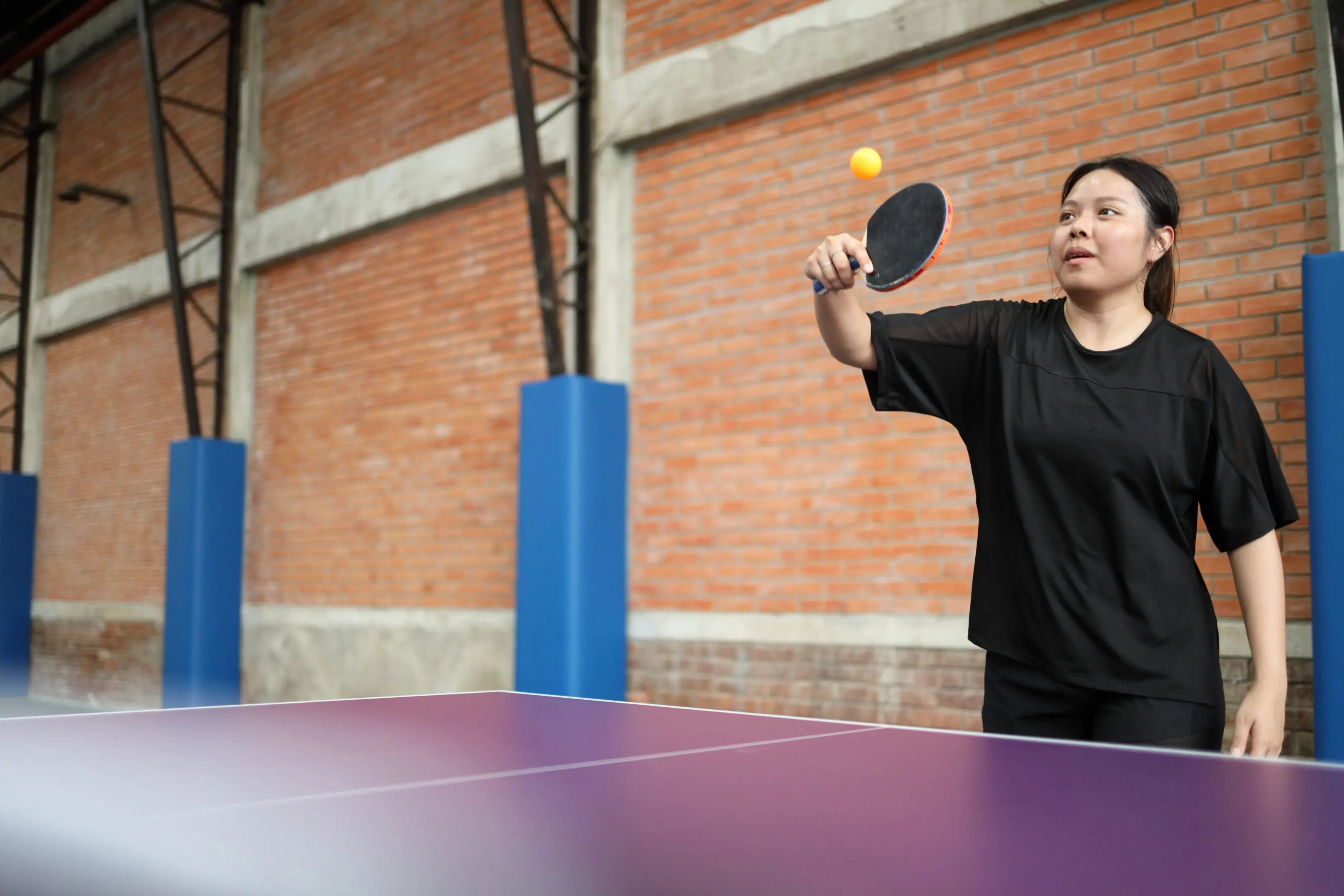
Memory and Learning
Every opponent teaches you something.
Perhaps one opponent repeatedly serves short.
Another favors the backhand.
Another attacks whenever you return the ball too high.
With experience, players begin recognizing patterns and adjusting their responses.
Learning a sport therefore involves more than strengthening muscles. It requires acquiring skills, remembering strategies, correcting mistakes and adapting future behavior from previous experience.
That is learning in motion.
And Don’t Forget the Fun
There is another reason table tennis deserves attention:
The Takeaway
Table tennis brings movement and thinking together.
The ball changes speed, direction and spin.
Your opponent changes strategy.
Your brain and body continually adapt.
You watch, anticipate, decide, coordinate, move and respond—often within moments.
Table tennis should not be presented as a treatment for neurological disease, nor can anyone promise that playing it will prevent cognitive decline.
What we can say is that table tennis provides an enjoyable form of physical activity that continually challenges attention, coordination, reaction, anticipation, movement and decision-making.
That makes this little ball, little racket and nine-foot table capable of creating a surprisingly demanding experience for both body and mind.
So if you happen to suffer from our newly coined—
HIPPOPOTOMONSTROTABLETENNISIPHOBIA
—we respectfully suggest beginning with one gentle rally.
Then another.
And another.
You might discover that the thing you feared becomes the game you love.